Maintenance & Upkeep · 3 min read
How to Make a Commercial Paint Job Last 10–12 Years in South Florida
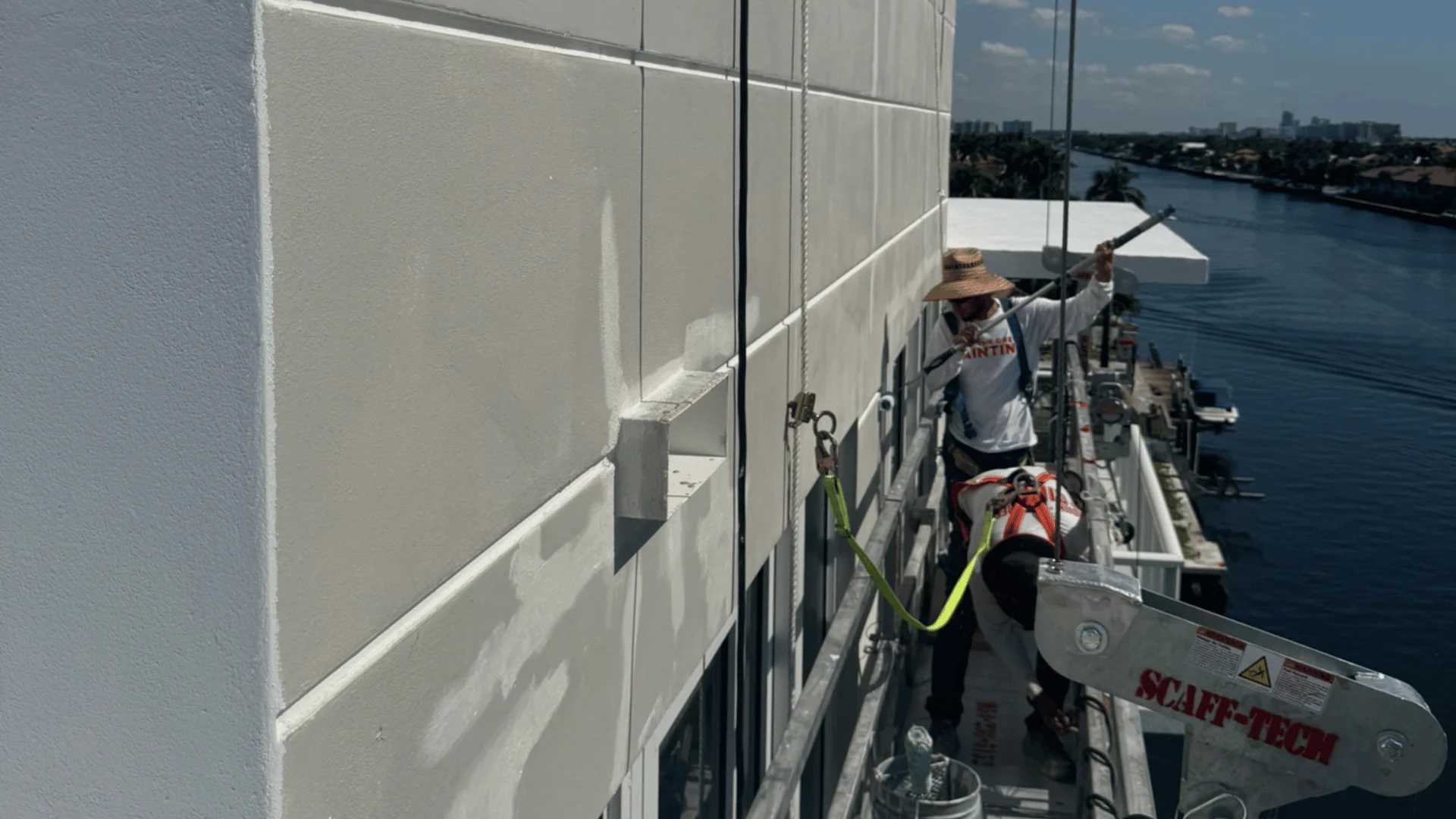
On a commercial building, repainting means scaffolding, lift rental, and downtime, so every extra year of paint life matters. Higher-grade coatings plus scheduled washing can push a South Florida exterior to a 10–12 year lifespan.
By John 'The Greek' Painting · Published · South Florida
TL;DR: Spec higher-grade elastomeric or premium coatings instead of standard paint, schedule pressure washing once or twice a year, inspect annually for water intrusion and rust, and recoat high-wear areas early. Done together, these push a commercial exterior to a 10–12 year lifespan.
To make a commercial paint job last 10–12 years in South Florida, upgrade the coating to a higher-grade elastomeric or premium product, schedule regular pressure washing, inspect yearly for water intrusion and rust, and recoat high-wear areas before they fail. On a large building, repainting costs far more than it does on a home, since it means lifts or scaffolding, traffic control, and tenant disruption. That's why the economics favor spending a bit more upfront on materials and maintenance to buy years of extra life. We've coated and maintained South Florida commercial properties since 1977, and the difference between a 6-year and a 12-year exterior is almost always the grade of materials and the consistency of upkeep.
Why does commercial paint fail faster near the water?
Larger buildings and waterfront sites face more exposure than a typical home: more wall area, more seams, and, on coastal properties, a constant salt load. That means more maintenance, but also more to gain from doing it right.
- 5–7yr — Standard-grade reality: Standard commercial paint in South Florida typically lasts only 5–7 years before fading, chalking, and water intrusion force a repaint.
- 1mi — The coastal penalty: Buildings within a mile of the water take constant salt spray, which corrodes metal and breaks down coatings 20–30% faster.
- 2–3× — Repaint cost multiplier: Lifts, scaffolding, traffic control, and downtime make a commercial repaint several times more disruptive than a residential one, so every extra year of paint life pays off.
How to push the lifespan to 10–12 years
Four moves separate a coating that lasts a decade from one that needs redoing in six years. The first is a materials decision; the rest are about consistent upkeep.
- Upgrade to a higher-grade coating. Spec a premium elastomeric coating on stucco and masonry. It forms a thick, flexible, waterproof membrane that bridges hairline cracks and blocks wind-driven rain. On metal and trim, use premium 100% acrylic with rust-inhibitive priming. The material upgrade costs more per gallon, but it's the largest single factor in reaching a 10–12 year lifespan.
- Stucco / masonry
- Premium elastomeric
- Metal / trim
- 100% acrylic + rust primer
- Schedule regular pressure washing. Wash the building once or twice a year, and twice for coastal or high-traffic sites. Removing salt, dirt, pollen, and the mildew biofilm before it takes hold protects the coating and keeps the property presentable for tenants and customers. This is the highest-value recurring task on a commercial exterior.
- Frequency
- 1–2×/yr (2× coastal)
- Targets
- Salt, mildew, biofilm
- Inspect for water intrusion and rust yearly. Walk the building annually: check caulk and sealant at windows, expansion joints, and penetrations; look for stucco cracks, efflorescence, and rust streaks on railings, stairs, and fixtures. Seal cracks and spot-treat rust right away, since a small repair now prevents a large failure later.
- Check
- Caulk, joints, cracks, rust
- Cadence
- Annual walk-through
- Recoat high-wear areas early. Sun-facing elevations, ground-level walls, and metal stairs and railings wear faster than the rest of the building. Recoating these zones on their own schedule, rather than waiting for the whole exterior to fail, keeps the building looking maintained and stretches the full-repaint interval to a decade or more.
- Recoat first
- South/west walls, metal
- Outcome
- Full repaint pushed out
On a commercial building, the cheapest paint is almost always the most expensive choice. Spend more on the coating and a little each year on washing, and you turn a six-year exterior into a twelve-year one.
Commercial Estimator · John 'The Greek' Painting · South Florida since 1977
How long should a commercial coating last?
With a higher-grade coating and a maintenance plan, here's the realistic range by surface. Coastal buildings sit at the lower end unless washing and rust treatment stay consistent.
- Stucco & masonry (Premium elastomeric + upkeep): 10–12 yr
- Stucco, standard paint (No upgrade, minimal upkeep): 5–7 yr
- Metal railings & stairs (Acrylic + rust priming): 5–7 yr
- Coastal (< 1 mi from water) (Salt-air penalty): −20 to −30%
- Ranges reflect 49 years of commercial work across South Florida.
Frequently asked questions
How long does commercial exterior paint last in South Florida?
Standard commercial paint typically lasts 5–7 years before fading and water intrusion force a repaint. With a higher-grade elastomeric coating and a maintenance plan of regular washing and annual inspections, a stucco or masonry exterior can reach 10–12 years. Coastal buildings sit at the lower end unless salt is washed off consistently.
Is it worth paying for higher-grade commercial coatings?
On a commercial building, almost always. Repainting means lifts or scaffolding, traffic control, and tenant or customer disruption, which is several times the hassle of a home repaint. A premium elastomeric coating costs more per gallon but can double the lifespan, so the upgrade usually pays for itself by deferring the next repaint by years.
How often should a commercial building be pressure washed?
Once or twice a year, moving to twice a year for coastal or high-traffic properties. Washing removes salt, dirt, pollen, and the mildew biofilm that degrade coatings from the surface. It's the single highest-value recurring task for keeping a commercial exterior both protected and presentable.
Why do waterfront commercial properties cost more to maintain?
Buildings near the water take constant airborne salt, which corrodes metal and breaks down coatings 20–30% faster than inland. Larger waterfront properties also have more wall area, seams, and exposed metal to maintain. That means more frequent washing, rust treatment, and inspection, but also the biggest payoff from staying on a consistent plan.