Florida Climate & Durability · 3 min read
Best Exterior Paint for Florida Humidity (2026 Guide)
Not all exterior paint survives South Florida. After 49 years, we know which products hold up, and which ones don't. Here's what we use and why.
By John 'The Greek' Painting · Published · South Florida
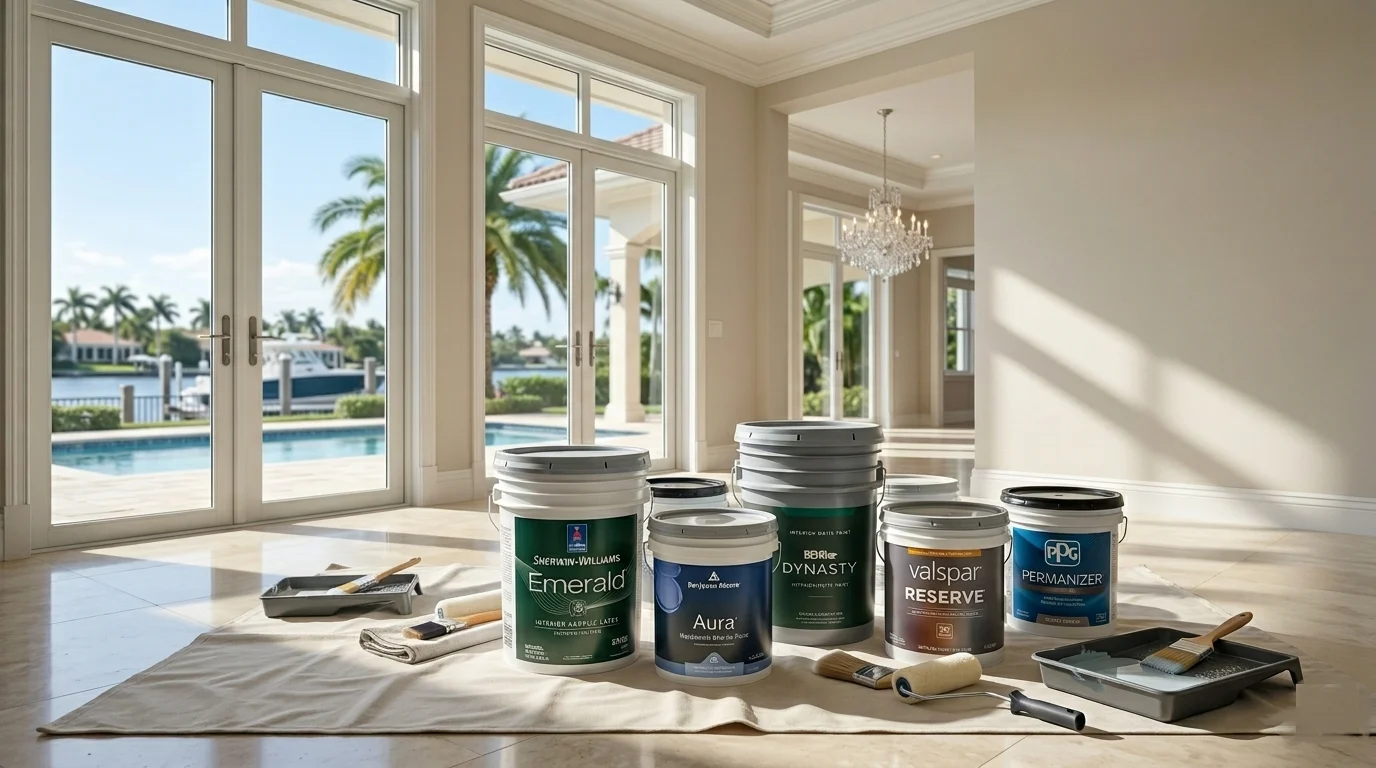
The best exterior paint for Florida humidity is 100% acrylic latex for wood and fiber cement, and elastomeric coating for stucco and concrete block. Oil-based paints, cheap builder-grade latex, and interior paints used outdoors all fail prematurely in South Florida's climate. After 49 years of painting homes across the region, here's what we specify on every job, and what we refuse to use.
What Makes Paint Fail in Florida?
Three factors that standard paints aren't built to handle simultaneously:
- Sustained humidity above 75%: moisture penetrates paint films that aren't vapor-permeable, causing blistering and peeling from within
- Intense UV at latitude 25°N: degrades paint binders faster than anywhere else in the continental U.S., causing fading, chalking, and loss of adhesion
- Salt air within 1–3 miles of the coast: corrosive particles accelerate degradation by 30–50% on homes near the ocean or Intracoastal
Best Paint for Stucco and Concrete Block
Stucco is the dominant exterior surface in South Florida. It's porous, prone to hairline cracking, and expands in heat. The right paint must bridge cracks, resist moisture penetration, and remain flexible.
Elastomeric Coating (Top Choice)
Elastomeric coatings create a thick, flexible, waterproof membrane that bridges hairline cracks up to 1/16 inch. They expand and contract with the substrate, preventing the cracking that standard paints develop under daily temperature swings.
- Sherwin-Williams Conflex XL: our most-specified product for stucco. 10+ year track record in South Florida.
- Benjamin Moore Elastomeric: excellent flexibility and waterproofing. Slightly lower build than Conflex XL.
Premium 100% Acrylic (Alternative)
When homeowners prefer a traditional paint look over the heavier build of elastomeric, premium 100% acrylic is the next best option. It's more vapor-permeable than elastomeric, which can be beneficial on walls with interior moisture drive, but it won't bridge cracks.
Best Paint for Wood and Fiber Cement
Wood and fiber cement (Hardie board) expand and contract with moisture changes. They need a paint that adheres strongly, resists mildew, and maintains flexibility.
- Sherwin-Williams Duration: self-priming, excellent adhesion, built-in mildewcide. Our standard for wood and fiber cement exteriors.
- Benjamin Moore Aura: premium option with superior color retention and mildew resistance. Higher cost but longer aesthetic life.
- PPG Timeless: solid mid-range option with good UV and mildew resistance.
Paints We Avoid in South Florida
- Oil-based (alkyd) paints: become brittle within 2–3 years under Florida's UV and heat cycling. They crack and peel. We never use them on exteriors.
- Builder-grade latex (big-box store basics): thin film build, low mildewcide, poor UV stabilizers. Fail in 3–4 years instead of 7+.
- Interior paints used outdoors: no UV resistance, no mildewcide, no flexibility. Peeling within a single wet season.
- Any paint without mildewcide: mildew is the fastest-growing problem on South Florida exteriors. If the product doesn't list mildewcide, don't use it here.
Primer Matters as Much as Paint
The right primer creates the adhesion bond that determines whether paint lasts 3 years or 8. For stucco: masonry bonding primer (two coats on bare surfaces). For wood with tannin bleed: oil-based or shellac-based primer. For previously painted chalky surfaces: acrylic bonding primer. For metal: rust-inhibitive primer. Skipping primer or using the wrong one is the most common cause of premature failure we see on repaint jobs.
Frequently asked questions
What is the best exterior paint for Florida humidity?
For stucco and concrete block, elastomeric coating (Sherwin-Williams Conflex XL) is the best. It creates a flexible, waterproof membrane that bridges cracks. For wood and fiber cement, premium 100% acrylic latex with built-in mildewcide (Sherwin-Williams Duration, Benjamin Moore Aura) is the best choice. Avoid oil-based paints and builder-grade latex in South Florida.
Is elastomeric paint better than regular latex for Florida stucco?
Yes, for most South Florida stucco homes. Elastomeric coating bridges hairline cracks, is fully waterproof, and expands with the substrate. Standard 100% acrylic latex is more vapor-permeable but won't seal cracks. If your stucco has visible cracking (most South Florida homes do), elastomeric is the right choice.
Can I use oil-based paint on my Florida home exterior?
We don't recommend it. Oil-based paints become brittle under South Florida's UV and heat cycling, typically cracking and peeling within 2–3 years. 100% acrylic latex and elastomeric coatings remain flexible and last 5–10 years when properly applied.
How much does quality exterior paint cost in South Florida?
Premium exterior paint for South Florida costs $50–80 per gallon (100% acrylic) or $70–100 per gallon (elastomeric). Builder-grade paint costs $25–35 per gallon but lasts half as long. The cost difference is typically $500–1,200 on a full home repaint, far less than repainting two years early.