Florida Climate & Durability · 3 min read
Why Does Paint Peel in Florida's Humidity? Causes & Solutions
Peeling paint is one of the most common complaints from South Florida homeowners, and it's almost always preventable. Here's why it happens and what actually stops it.
By John 'The Greek' Painting · Published · South Florida
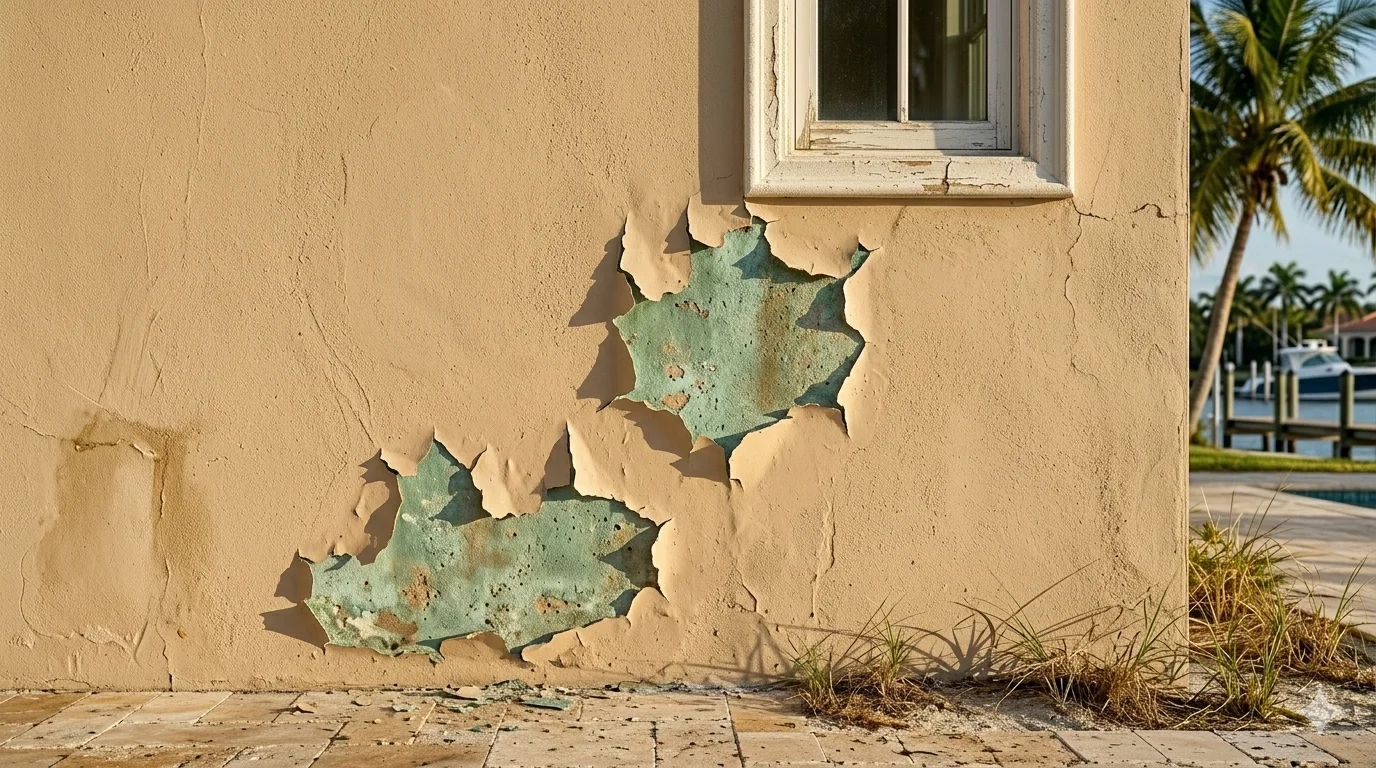
Paint peels in Florida primarily because of one thing: moisture. Whether it's entering from outside through a failing paint film, condensing behind walls due to air conditioning, or wicking up from the ground, moisture trapped beneath paint has nowhere to go but out. After nearly five decades painting South Florida homes, we've diagnosed peeling on hundreds of jobs, and the fix is almost always straightforward once you identify the source.
The 5 Causes of Paint Peeling in South Florida
1. Moisture Intrusion From Outside
South Florida averages 60 inches of rain per year. When paint develops cracks or loses adhesion at edges (around windows, doors, trim), water finds its way in and pushes the paint film off as it escapes. You'll see peeling concentrated around windows, doors, and where materials meet.
2. Condensation From Air Conditioning
A uniquely Florida problem: when AC cools interior walls below the dew point, humid outdoor air condenses on the interior wall surface and pushes moisture through to the exterior paint from behind. Look for blistering on exterior walls shared with heavily air-conditioned rooms.
3. Poor Surface Preparation
The number one cause of premature peeling on repaints. Painting over dirty, mildewed, chalky, or wet surfaces guarantees early failure. Paint can only bond to what's underneath it.
4. Wrong Paint Type for Florida
Standard interior paints used outdoors, oil-based paints without adhesion primers, or low-quality latex without UV stabilizers all fail faster in South Florida. Oil-based paints become brittle and crack under daily temperature swings. The right choice: 100% acrylic latex for wood, elastomeric coatings for stucco.
5. Skipping or Using Wrong Primer
Primer is not optional in South Florida. It bonds the topcoat to the substrate, seals porous surfaces, and blocks tannin stains. Bare stucco without masonry primer will almost certainly fail within a few years.
How to Fix Peeling Paint the Right Way
- Find and fix the moisture source. Check caulking around windows and doors, inspect roof flashing and gutters, look for stucco cracks, and verify grading directs water away from the foundation. No paint job lasts if moisture keeps getting in.
- Scrape and sand all loose paint. All peeling, flaking, and loose paint must come off. Hand scrape and sand until you reach a firmly adhered edge or bare surface. Don't feather over loose edges. They'll continue peeling.
- Kill mildew and pressure wash. Treat any biological growth with a mildewcide solution. Let dwell 10 minutes, scrub, then pressure wash. Allow 24–48 hours to dry completely before priming.
- Fill cracks and apply primer. Fill stucco cracks with elastomeric caulk or masonry patching compound. Prime with the correct product: masonry primer for stucco/concrete, bonding primer for previously painted surfaces, oil-based primer for raw wood with tannin bleed.
- Apply two topcoats. Two coats of 100% acrylic latex or elastomeric coating, applied within the manufacturer's recoat window. Don't rush the second coat in humid conditions.
When Peeling Signals a Bigger Problem
If the same areas peel repeatedly after multiple paint jobs, or if you find soft or spongy substrate behind peeling paint, you may have rot, water intrusion behind stucco, or a vapor drive problem. An experienced painter can distinguish a cosmetic issue from a structural one during a site assessment.
Frequently asked questions
Why does paint peel in Florida?
The primary cause is moisture: rain, humidity, AC condensation, and salt air. Moisture gets trapped beneath the paint film and pushes it off. Poor surface preparation, wrong paint type, and skipped primer are the most common contributing factors.
Can I paint over peeling paint?
No. All loose and peeling paint must be scraped and sanded off, the moisture source must be fixed, and the surface must be properly cleaned and primed before new paint goes on. Painting over peeling paint always results in the same problem returning faster.
How do I stop paint from peeling on my Florida home?
Fix the moisture source first, then scrape all loose paint, kill any mildew, pressure wash and dry the surface, fill cracks, apply the correct primer, and use two coats of 100% acrylic latex or elastomeric paint. This process separates paint jobs that last 8 years from ones that fail in 3.
Is peeling paint a sign of a bigger problem?
Sometimes. If the same areas peel repeatedly after multiple paint jobs, or if you find soft or spongy substrate, you may have structural moisture issues like rot, water intrusion behind stucco, or a vapor drive problem. A professional assessment can determine whether it's cosmetic or structural.